It might seem a little crazy to be doing this at the end of July. And you’re right.
I’m hoping it isn’t too late to salvage what’s left of the growing season. Our days up here—at almost 9,000 feet—haven’t been warm enough for my tomato plants and (very sad) cucumber plant to grow. While I’ve been enjoying the cool summer and frequent thunderstorms, my plants have not.
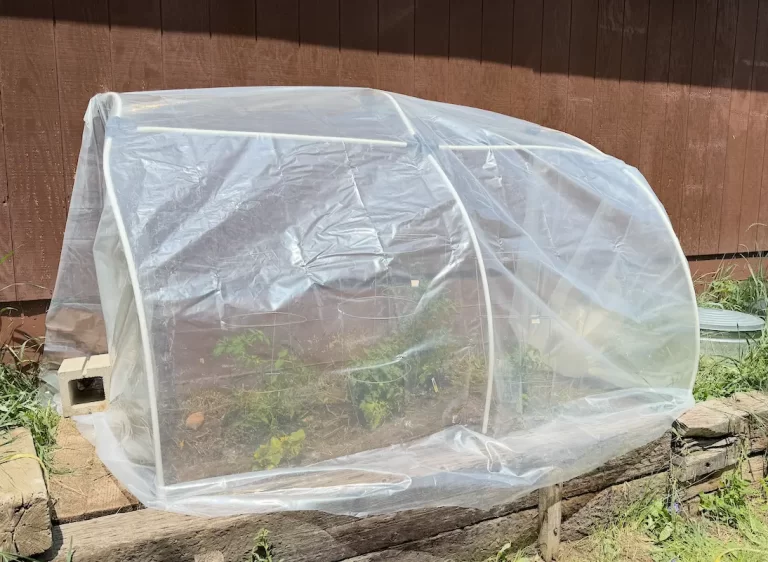
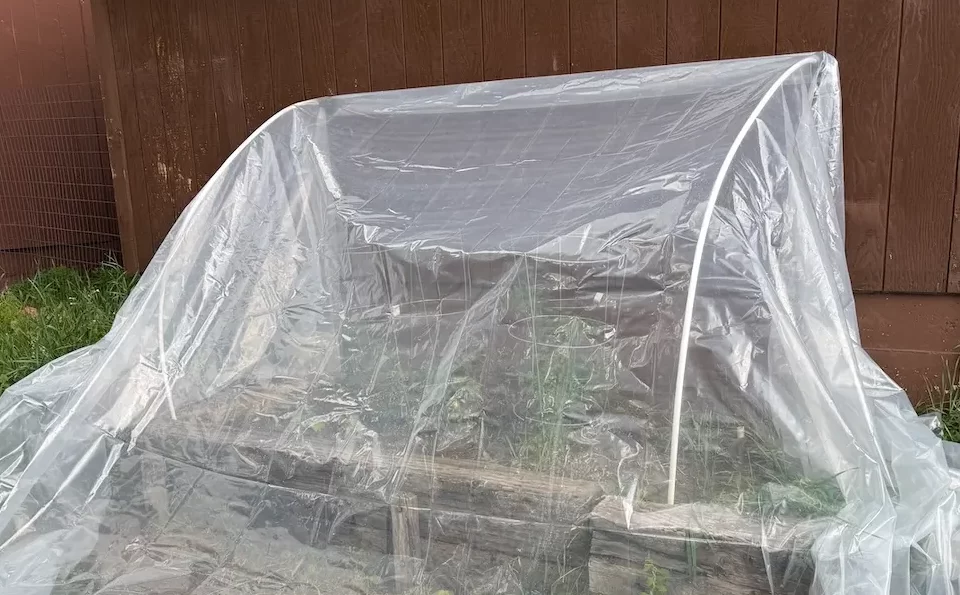
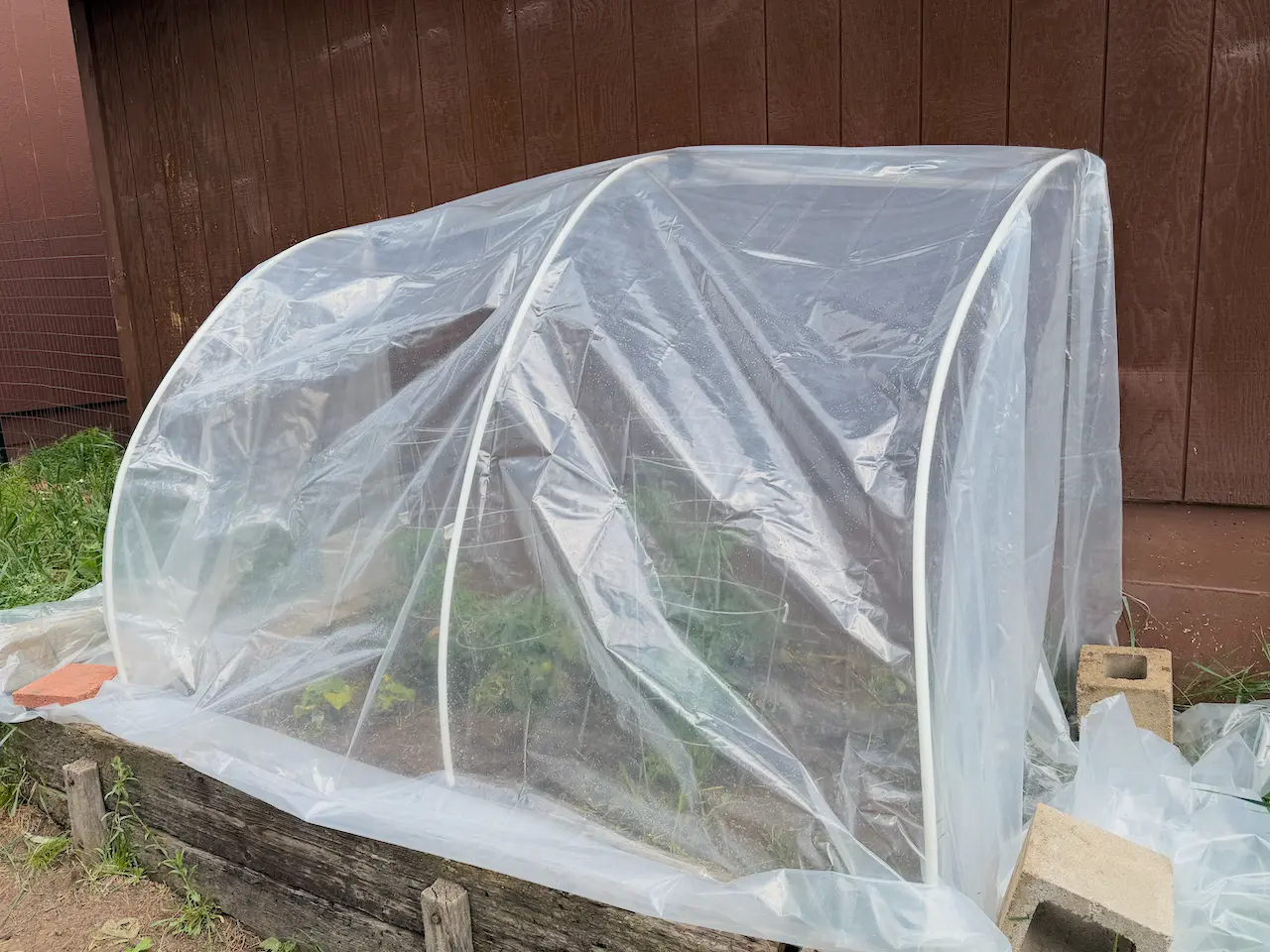
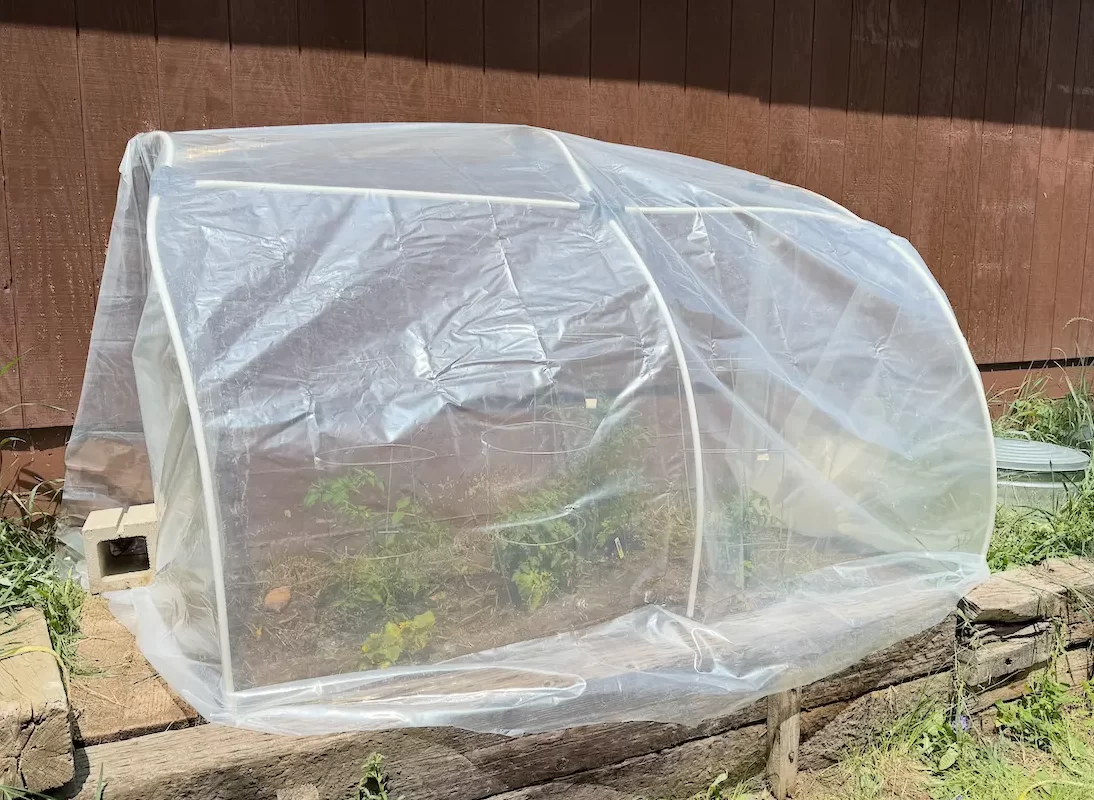
So here it is: my half hoop house, and my attempt to get one ripe tomato this year.
The Build:
Like most of my projects, I try to be as frugal as possible and DIY what I can. I ended up using 1/2-inch PEX pipe, which I bought in a 100 ft. roll from Home Depot for about $30. For the cover, I took a chance on 6 mil greenhouse plastic from Amazon. (Here’s hoping it lasts a few seasons.)
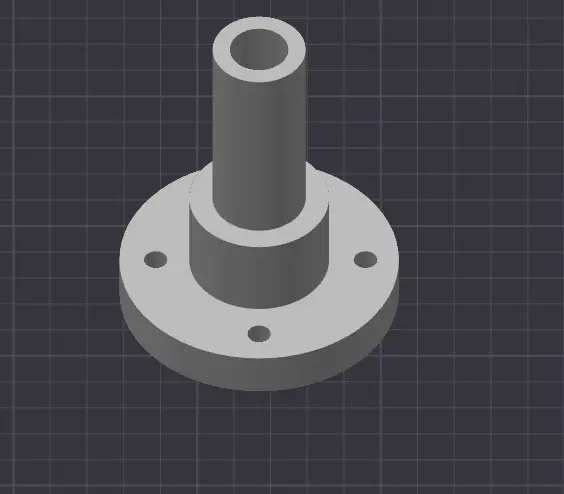
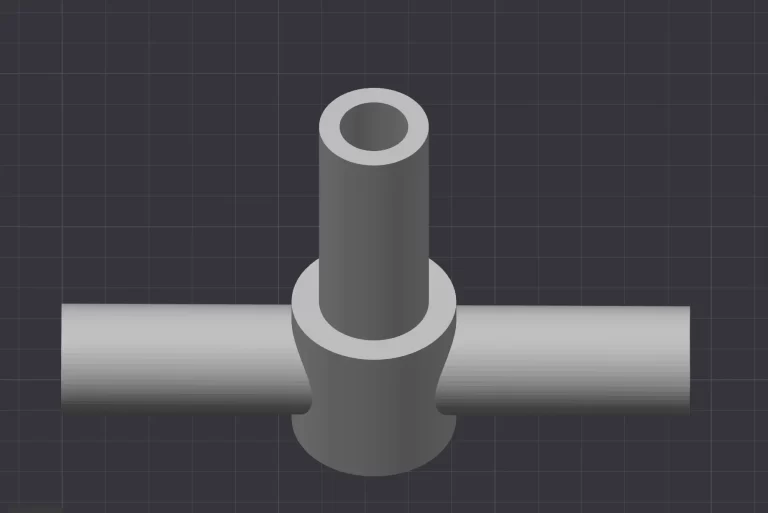
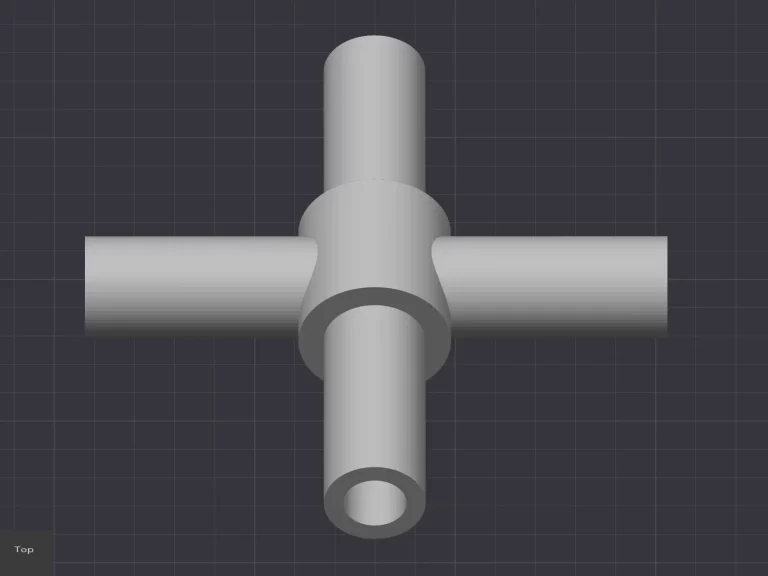
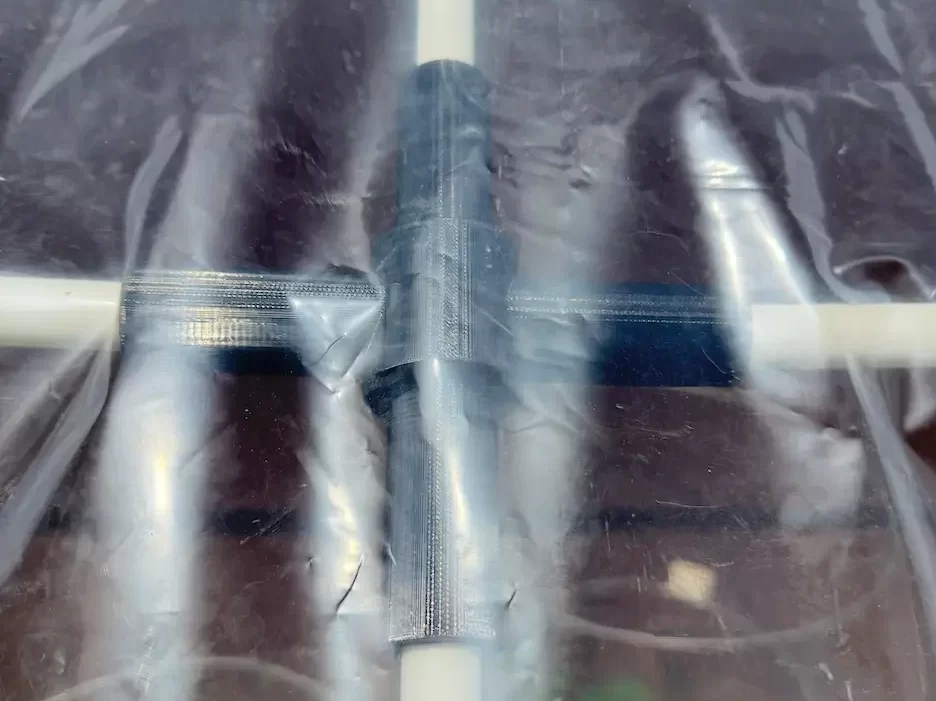
For connectors, I printed PETG pieces on my 3D printer—thanks to a file someone kindly shared on MakerWorld.
The Fails Learning Process:
The first iteration was… a flop (pun intended).
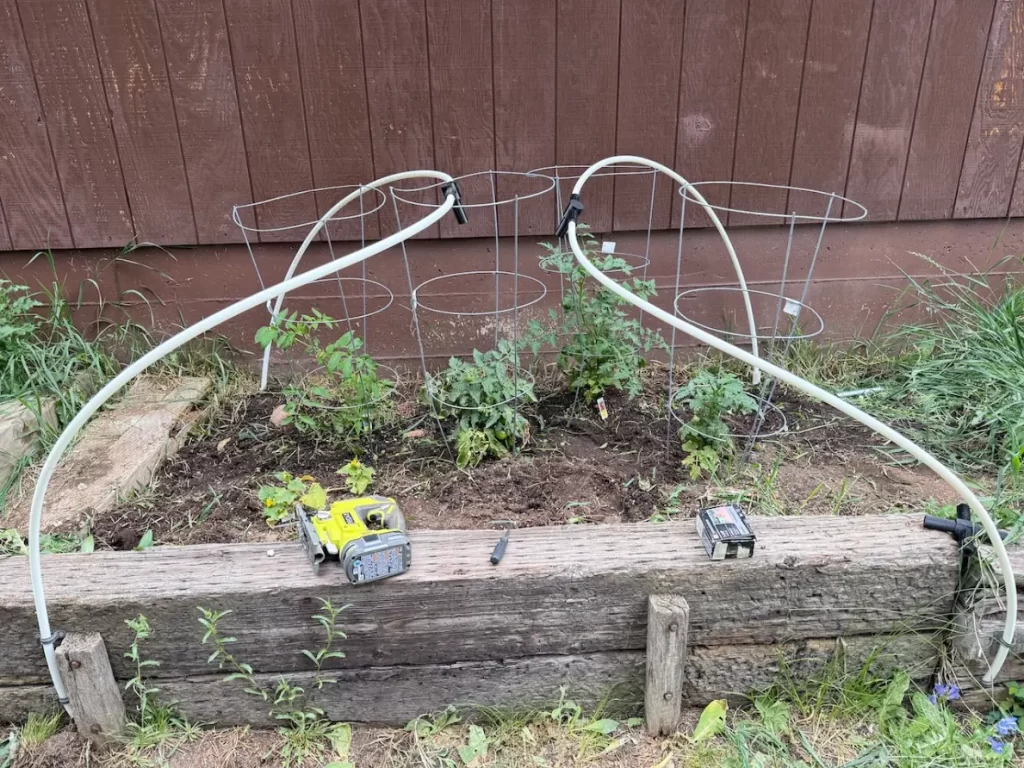
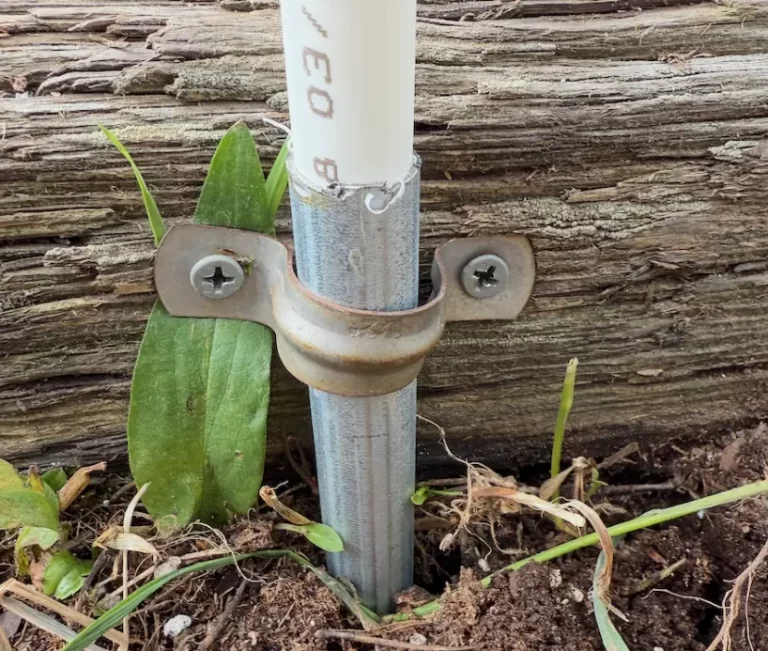
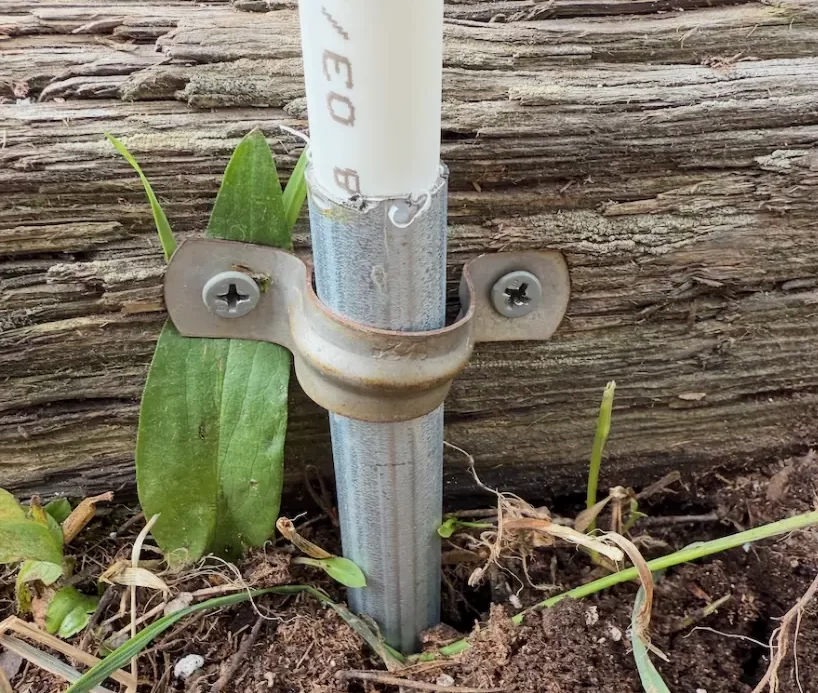
Trying to avoid anchoring into the garage, I drove scrap PVC pipe into the ground to hold one end of the PEX. The other end attached with existing conduit straps on the garden bed. It did not provide enough tension at the height I wanted for the hoops.
Lesson learned on Day 1.
By Day 2, I gave in and went with my original plan.
Day 2: What worked
Once I anchored the PEX directly to the garage, things started to (literally) shape up. I used the PETG connectors and pieced together the frame.
At first, I only added end supports. That technically worked—but the middle sagged and pressed into one of the tomato cages. So I added a third middle support. That helped a lot.
I didn’t measure perfectly (at all), but I placed the center anchor a little higher to create a gentle peak for runoff. The left side still pulled inward slightly, so I added a “spine” support using tee and cross connectors I had already printed.
The Classic DIY Moment
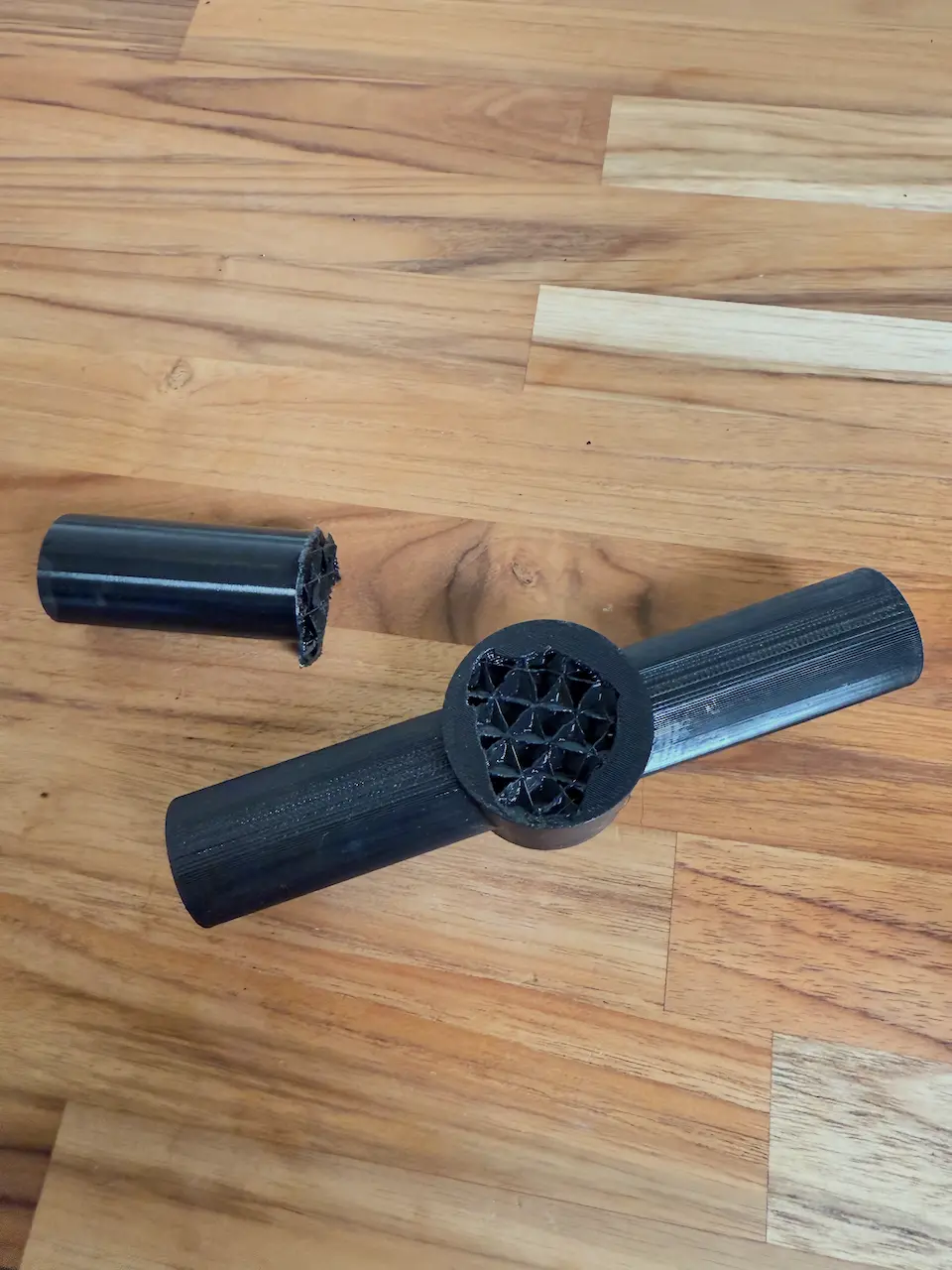
Of course, right at the end, I tried to remove a piece of PEX from a tee connector and… snapped the print. Almost done. I had accepted that I’d need to reprint the part and went inside.
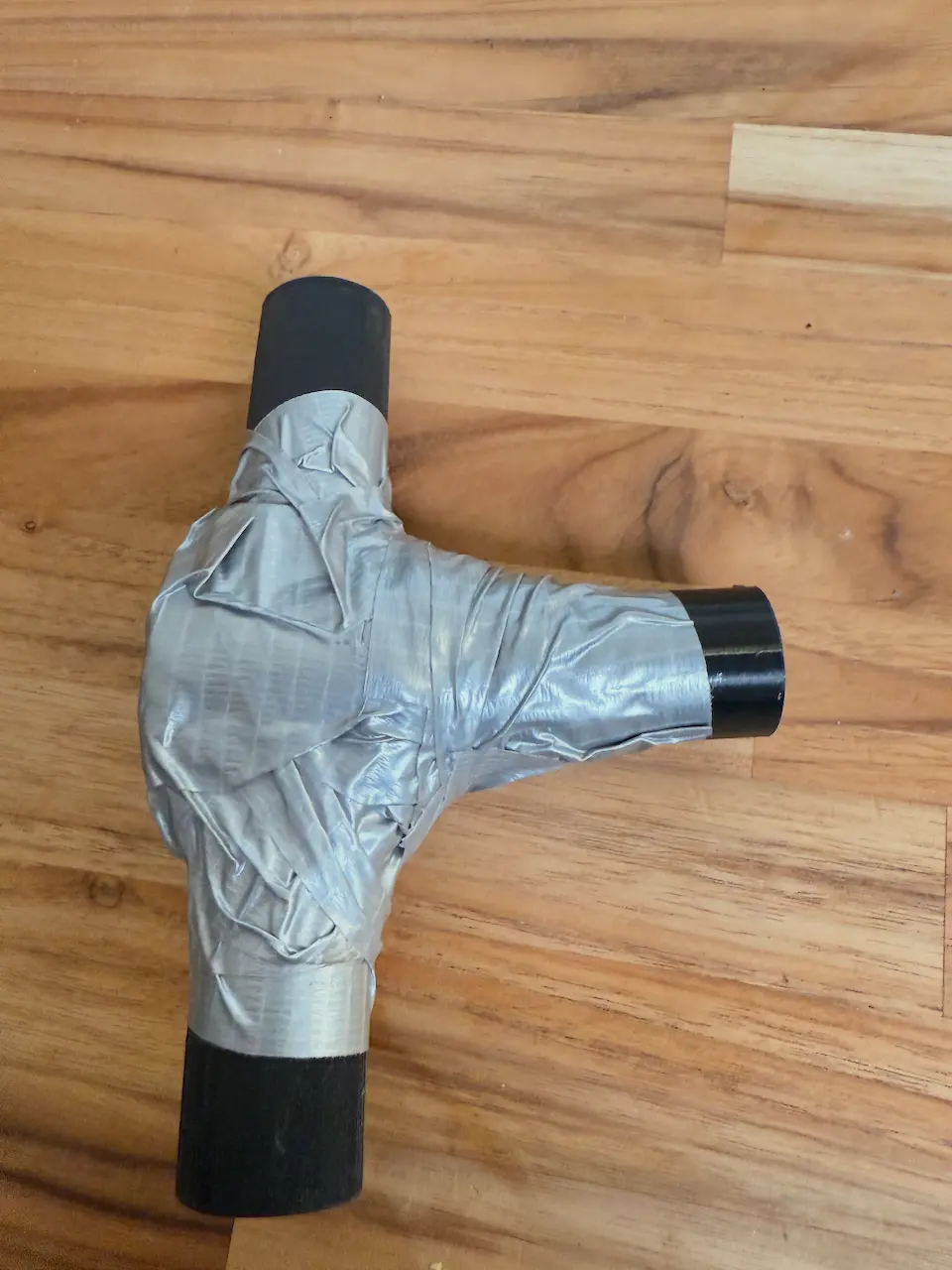
But then I remembered the universal fixer: duct tape.
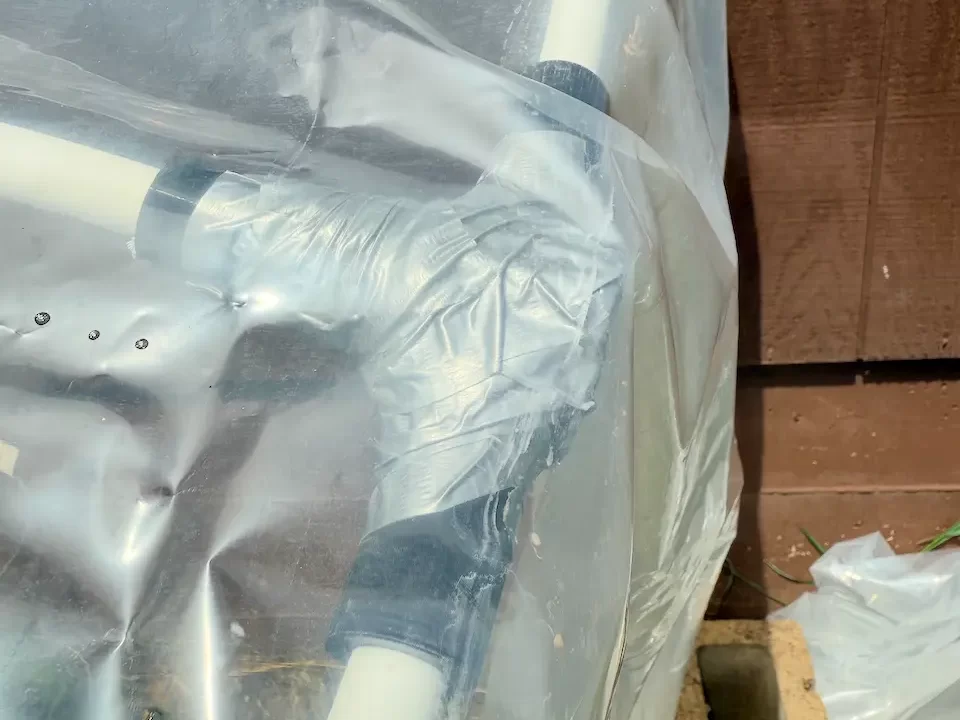
Turns out, it was good enough. We’ll see how it holds up to sun exposure—but for now, it saved a print and got the structure back in action.
Final Thoughts
Is it perfect? Definitely not.
But it’s standing, it’s protecting my plants, and it might just get me that ripe tomato.